

Defence Future Workforce Conference 2027
In partnership with

Industry partner

Defence is entering a period of profound change. Technology, demographics, skills shortages and a changing labour market are reshaping how we attract, develop, retain and employ people. At the same time, emerging technologies are changing the nature of work itself and challenging established assumptions about the size, shape and skills of the Defence workforce.
The Defence Future Workforce Conference will bring together perspectives from across Defence and the wider workforce ecosystem to explore the challenges that will shape the Integrated Force towards 2035–2040 and beyond.
Through expert panels, discussion and networking, the conference will examine connected themes and help shape future Defence policy.
The workforce Defence will rely upon in 2035 is being shaped by decisions made today. Join the conversation and help shape what comes next.


Registration and Welcome Coffee
Welcome and Opening Remarks: The Future Operating Environment
Major General Sam Humphris CB MBE
Air Vice-Marshal Mark Ridgway
Richard Morgan
Ministerial Keynote: The Future Defence Workforce
Coffee Break and Networking
Can Defence Adapt its Workforce as Fast as Technology is Changing the Fight?
Artificial intelligence, autonomy, cyber capabilities and advanced data analytics are changing how Defence operates and generates capability, but their effects on people, organisations and workforce models will not necessarily be predictable. Defence must exploit these technologies while retaining appropriate human judgement, accountability and operational effectiveness.
This will require more than redesigning individual roles. It raises fundamental questions about organisational structures, leadership, culture, human-machine teaming and the balance between people and automated capability.
Industry Keynote
Lunch and Networking
Can Defence Build the Skills it Does Not Yet Know it Needs?
Technological change, shifts in the strategic and operating environment, and changing workforce expectations will continually reshape the skills Defence requires. Yet forecasting specific future requirements is inherently uncertain, and Defence cannot assume that every capability should, or can, be developed and retained internally.
Defence therefore needs to become better at anticipating changing demand, developing skills at pace, and deciding which expertise it should build and retain internally and which it should access through different parts of the Whole Force.
Andy Bower OBE FLPI AFNI
Industry Keynote
Afternoon Coffee and Networking
Who Will Choose Defence in 2035, and on What Terms?
The labour market from which Defence draws its people is changing. Demographic, economic and social trends are reshaping both the supply of talent and individuals' expectations of work, while Defence faces competition for scarce STEM, digital and AI expertise from employers in the UK and internationally.
At the same time, Defence's employment offer, entry routes, vetting processes and career models may constrain Defence's ability to access the people and expertise it needs at the pace required.
Peter Watkins
Summary and Open Floor Discussion
Closing Remarks and Next Steps
Networking Reception
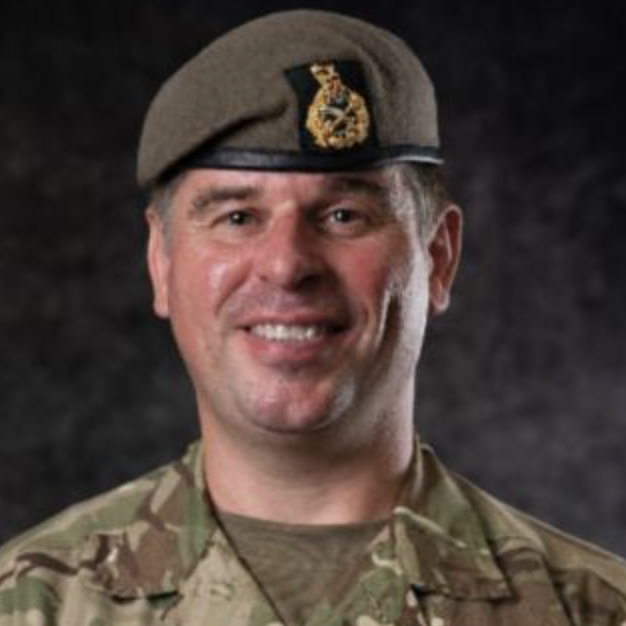
Major General Sam Humphris CB MBE
Assistant Chief of the Defence Staff (People),
Ministry of Defence
Major General Sam Humphris commissioned into The Duke of Wellington’s Regiment in 1998, serving initially on Public Duties in London, as well as deployments to Belize and Canada. After training school leaver recruits, he rejoined the Battalion in Germany, now Armoured Infantry, completing operational tours in Kosovo (Op AGRICOLA 5) and Iraq (Op TELIC 1). He was also aide-de-camp to the Duke of Wellington during the Regiment’s Tercentenary.
Following Op TELIC, he instructed on the Platoon Commanders’ Battle Course, deploying frequently to Kenya and Malawi, and with the opportunity to lead expeditions to Norway and the Alps. He then served in the Ministry of Defence, working for the Assistant Chief of the General Staff and later after promotion, in Commitments Directorate, Army HQ.
He company commanded in 3 YORKS and deployed to Afghanistan on Op HERRICK 10. After serving as Military Assistant to the Director General Land Warfare, he was fortunate enough to study for an MPhil in International Relations at Cambridge University. On promotion, he returned to Army HQ to lead AGILE WARRIOR, the Army’s conceptual force development effort. In 2015 he assumed command of 2 YORKS, overseeing its conversion to Light Mechanised Infantry, high readiness duties commanding the six-nation EU Battlegroup, and concluded his time with a nine month Battlegroup deployment to Afghanistan on Op TORAL 5.
On promotion to the General Staff, he served as Chief of Staff of the newly formed Land Warfare Centre, before attending the Higher Command and Staff Course, and assuming command of 1st Armoured Infantry Brigade. The privilege of commanding the Brigade’s many operational outputs, also included a deployment to the US for Joint Warfighting Assessment. On finishing command, he became Head Strategy for the Chief of Defence People, before promoting to become Director Personnel for the Army, which included responsibility as an Army Board member.
In January 2026 he moved to be Assistant Chief of the Defence Staff (People) in the Ministry of Defence, responsible for Armed Forces personnel and the 195,000 work force within the Military Strategic Headquarters.
He was appointed MBE in 2010 for his soldiers’ performance on operations in Afghanistan, a Companion of the Order of the Bath in 2026 for outstanding service, and is an elected scholar of St John’s College, Cambridge.
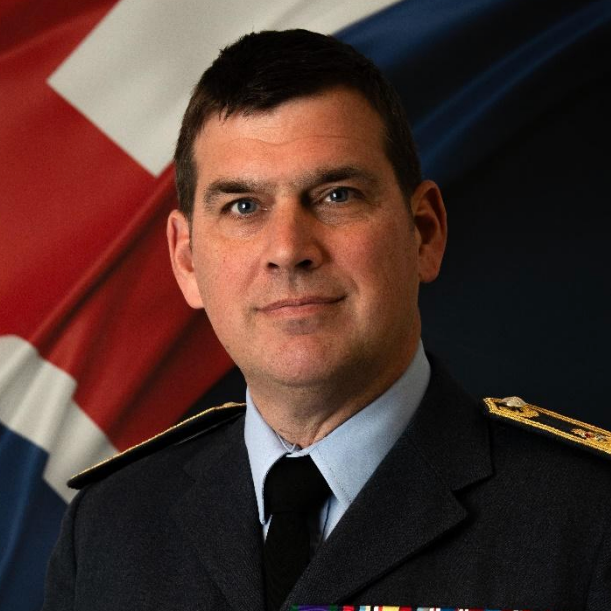

Air Vice-Marshal Mark Ridgway
Assistant Chief of the Defence Staff (Futures & Force Design), Military Strategic Headquarters
Peter Watkins
Visiting Professor, King's College London
Andy Bower OBE FLPI AFNI
Managing Director (Learning), Capita
Air Vice-Marshal Mark Ridgway grew up in North London and joined the Royal Air Force in 1999, commissioning as an Intelligence Officer.
His staff tours to date have included in the Permanent Joint Headquarters, in the Air Warfare Centre, in 11 Group at Air Command, in the United States Central Command and in various professional roles across the RAF, Joint, Defence and international organisations. He has also had the privilege of commanding in single Service, Joint, pan- Defence, and multi-national entities. Mark has further deployed multiple times to Afghanistan, Iraq, and the wider Middle East.
Following a tour as Commander of the National Centre for Geospatial Intelligence, he became Director Defence Futures on promotion to Air Vice-Marshal in October 2024. Mark is a graduate of the UK Advanced and Higher Command and Staff Courses and an alumnus of the Windsor Leadership Trust.
Academically, Mark holds a Bachelor’s degree in Politics from the University of Nottingham and three Master’s degrees in: Terrorism Studies from the University of St Andrews; Defence Studies from Kings College, London; and Leadership and Management from the University of Portsmouth. The latter was conducted under a Chief of the Air Staff's Fellowship and focused on leadership of military and civil servant analysts. He subsequently completed a Doctorate in Business Administration under a further CAS Fellowship, studying empowerment and mission command in the Information Age military. Mark is a strong advocate of lifelong learning, diverse perspectives and empowered innovation.
In his spare time he enjoys running, reading and piano playing.
Peter Watkins was the Director General Strategy & International (2017-18) and Director General Security Policy (2014-17) in the UK Ministry of Defence (MOD). In these roles, he was responsible for strategic policy & planning; deterrence policy, including nuclear; defence relations with NATO, the EU and with key bilateral allies (US, France, Germany, Australia); and, latterly, defence industrial policy, including exports. Previous roles included Director General of the Defence Academy (2011-14); Director of Operational Policy, MOD (2008-11); Director Typhoon (2007-08). Among earlier assignments, he was Private Secretary to the Defence Secretary (2001-03) and Counsellor (Defence Supply & Aerospace), British Embassy Bonn/Berlin (1996-2000).
Peter was a Non-Executive Member of the Board of the UK Space Agency (2021-2026). He is currently a Visiting Professor with the School of Security Studies, King's College London; an Independent Member of the Council of Cranfield University; a Visiting Senior Fellow with LSE IDEAS; and an Associate Fellow of Chatham House. He was awarded a CB and a CBE in the 2019 and 2004 Honours Lists respectively.
Andy Bower OBE FLPI AFNI is Managing Director for Learning at Capita, leading learning and workforce development services across skills, managed learning, learning design, technology and transformation.
Before joining the commercial sector, Andy served for more than 28 years in the Royal Navy, largely as a nuclear submariner. He held Sea Command, ran the Submarine Command Course and held senior responsibility for training and assuring ship and submarine crews. He later held executive leadership roles within Capita’s work on Project Selborne, the Royal Navy’s programme to transform how its people are trained and prepared for operations.
Andy combines the perspectives of an operator, training leader and learning-business executive. He is particularly interested in how Defence and industry can respond to accelerating technological change by building workforces that continually learn, adapt and develop new skills. His focus is on turning skills strategy into practical workforce capability, combining modern learning, technology and industry expertise with the rigour required in safety-critical and operational environments.