

The Rise and Fall of the British Army, 1975-2025
A conversation with Brigadier Ben Barry
Monday 15 June 2026 | 18:30-19:30 | Interactive Webinar
In partnership with
In his new book The Rise and Fall of the British Army, 1975–2025, Ben Barry analyses how the British Army evolved over the last half century. He shows how the Army’s combat capability increased throughout the 1980s in the face of a prospective war with the Soviet Union. The Army was tested on operations from Northern Ireland, the Falklands War, the 1991 Gulf War, through the Balkans and Sierra Leone to Afghanistan in 2001 and the 2003 invasion of Iraq.
There followed two decades of descent from this high plateau of military success. Mistakes made in Iraq and Afghanistan led to a decline in support for military deployments. Cuts to defence funding and botched equipment procurements left the British Army of 2025 less than half the size of that of 1975, with much fighting equipment either obsolete or approaching obsolescence.
There are lessons for the future from this half century of combat, continuity and change. The book identifies success factors for strategic leadership, innovation, adaptation and Army change programmes, as well as lessons from the Cold War relevant to the Army’s challenging new role in NATO.
Brigadier Ben Barry
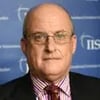
Ben Barry is an Associate Fellow, Defence and Military Analysis. He joined the IISS in 2010, before which he served in the British Army. As well as training in Germany, France, Cyprus, Canada, Portugal and New Zealand, and operational service in Hong Kong and Northern Ireland, he commanded both an armoured infantry battalion and a multinational brigade on UN and NATO operations in Bosnia. He was director of the British Army Staff in the UK Ministry of Defence and author of the Army’s lessons learned analysis of post-conflict stabilisation of Iraq.
He is a visiting professor at the Department of War Studies at King’s College London, and the author of Harsh Lessons: Iraq, Afghanistan and the Changing Character of War (IISS, 2016), The Road from Sarajevo: British Army Operations in Bosnia, 1995–1996 (The History Press, 2016) and Blood, Metal and Dust How Victory Turned into Defeat in Afghanistan and Iraq (Osprey, 2020).
Major General G S SMITH CB QVRM TD + DL LATE THE ROYAL GREEN JACKETS (V)

Major General Greg Smith was born in Norwich in 1956, educated at Norwich School and Newcastle University, where he graduated with a degree in Agricultural and Food Marketing.
He joined the Territorial Army as an infantryman in 1981, commissioned in 1983 and commanded the 5th (Volunteer) Battalion, The Royal Green Jackets from 1996-99. After staff appointments he was Director Reserves (Army) in HQ Land Forces (2006-08) and a member of The Royal College of Defence Studies (2009). Assistant Chief of the Defence Staff (Reserves and Cadets), the senior Reservist appointment in the UK, from 2010-13.
A market researcher throughout his career, he was Managing Director at Ipsos MORI, a leading market research and polling company until 2009. Returning to Norfolk in 2011, he became Chief Executive of the Royal Norfolk Agricultural Association until 2021. He now manages a portfolio of business and charity interests, in the UK and Europe.
Major General Smith became a RIFLES Colonel and member of its Regimental Council in 2010 and was Honorary Colonel of Northumbrian UOTC and the First Battalion, The London Guards. He was Chair of East Anglia RFCA from 2014 and Board Chair for the Council of RFCAs until 2025. He is Chair of Trustees of the United Kingdom Reserve Forces’ Association.
Awarded the Queen’s Volunteer Reserves Medal in 2009 and became a Companion of the Order of the Bath (Military) in 2013. He served as a Deputy Lieutenant of Buckinghamshire from 1997-2011. Awarded an Honorary Doctorate by the University of East Anglia (2019) and Fellowship of Newcastle University (2020), recognising his long-term support to both institutions.
He and Rebecca live and work in Norfolk. They have three grown-up children and seven grandchildren. In his spare time he enjoys walking, gardening, beekeeping, shepherding a small flock of Boreray sheep and supporting the Canaries.